

Tooth Extractions Hanover
The Last Resort for a Healthier Smile

Your natural teeth are meant to stay with you forever. However, this is unfortunately not always possible. When an infection, facial trauma, or impaction occurs, it’s necessary to remove the tooth to avoid more serious oral and overall health problems in the future. This is why our dentists at Dental Designs of Maryland offer tooth extractions as well as wisdom tooth extractions in Hanover. Using advanced technologies and techniques, we can ensure safe and comfortable procedures every time. Call us if you would like to discuss this emergency dental treatment further.
Why Choose Dental Designs of Maryland for Tooth Extractions?
- We Perform Wisdom Tooth Extractions
- Same-Day Dental Emergency Appointments Available
- We Welcome Your Dental Insurance
Reasons Why Tooth Extractions Are Necessary

A tooth extraction in Hanover will be recommended if:
- You have a serious tooth infection that has the potential to negatively impact your overall health.
- You have suffered severe facial trauma that resulted in a broken tooth that cannot be saved.
- You have wisdom teeth that are impacted and pushing against healthy teeth, which can lead to misalignment.
- Your child’s baby tooth will not come out on its own.
- You are suffering from advanced gum disease that is causing your teeth to become loose and your jawbone to weaken.
The Process of Removing a Tooth
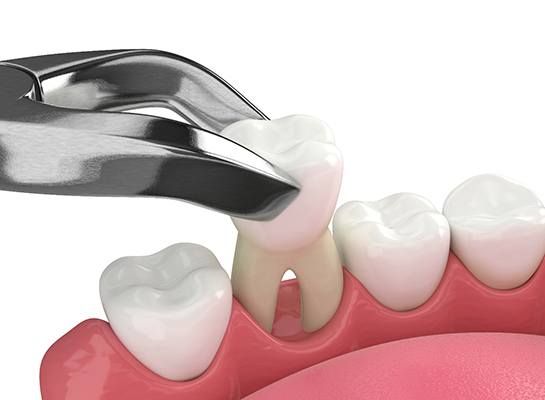
There are two types of tooth extractions:
- Simple Extraction – A simple extraction is performed when the tooth that needs to be removed has broken through the gumline. In this case, we will grip the tooth and rock it loose. Once it’s ready to be removed, we will extract it and tend to the extraction site.
- Surgical Extraction: A surgical extraction is used when the tooth in question is trapped underneath the gumline. This requires us to make a small incision in the gums first. Then, we can carefully remove the tooth section by section.
In both cases, the first step is to numb your mouth thoroughly. That way, you don’t feel any pain or discomfort during your time in the treatment chair.
Tooth Extraction Aftercare

Following your tooth extraction, it’s important that you:
- Change the gauze pads as needed
- Take prescribed or OTC pain medication as directed
- Eat only extremely soft foods, like plain yogurt
- Don’t use a straw, spit, or smoke
- Brush and floss carefully around the extraction site
- Use a cold compress for 10 minutes at a time
As the days go on, any discomfort, sensitivity, or soreness you’ve been experiencing should lessen. If that doesn’t happen, or your symptoms are getting worse, then call us ASAP.
Tooth Extractions FAQs
Is there an alternative treatment to having a tooth extracted?
Patients can typically count on our compassionate team in Hanover to do all we can to protect and preserve their natural teeth, so it may come as a surprise when we recommend an extraction. You might even wonder whether this service is truly necessary or whether your tooth can be treated some other way.
For instance, sometimes a root canal procedure followed by placing a dental crown can alleviate a severe toothache and safeguard your smile. But if our team suggests removal, it’s highly likely that we have already determined that no other options can feasibly treat the damaged, decayed, or otherwise unsalvageable tooth.
Does it hurt to have a tooth removed?
You’re not alone if you’re worried your upcoming procedure might hurt, but rest assured, our team understands that you may be feeling anxious and will do what we can to help you remain calm and comfortable during your appointment.
For instance, we’ll numb the affected area with a local anesthetic before getting started, so you might feel some pressure while we work, but not direct pain. Then, once the medications wear off, it’s normal to feel sore and swollen for a few days. Applying a cold compress or taking over-the-counter drugs, such as acetaminophen or ibuprofen, can often help ease associated aches.
How are wisdom tooth extractions different?
Wisdom teeth are third molars that typically arrive between the ages of 17 and 25, several years after all your other adult teeth have erupted. They tend to cause problems in their attempt to push through your gumline, such as overcrowding, infection, or impaction, which can hurt your dental health.
As a result, they are often removed before they can become problematic. In many instances, this requires surgical extraction to access the wisdom tooth, which might be trapped in your connective tissues or jawbone. In some cases, the enamel must also be broken into smaller sections to be taken out without damaging the jawbone.
How can I replace my now-missing tooth?
Unfortunately, your remaining teeth are prone to drifting out of alignment to close the gap left behind by the one that was pulled. This can lead to uneven wear and tear that results in cavities or injuries, as well as potential bite misalignments and TMJ (temporomandibular joint) stiffness or discomfort.
Our team offers the following options for replacing missing teeth, and we will gladly make a professional recommendation based on your individual circumstances:
- This is the tried-and-true solution for complete tooth loss, but a partial set can also replace sporadically missing teeth throughout your mouth.
- Dental bridge. If you have a wider space in your smile from one or more absent teeth, you might be a good candidate for one of these lifelike restorations, which are anchored in place via a dental crown on each side.
- Dental implants. This is the only option that involves surgically placing a support rod that fuses with your jawbone for a more reliable, longer-term solution.